Preview tattoo-style lettering in seconds with FontSt’s Tattoo Font Styles Generator—perfect for names, initials, short quotes, and meaningful dates. Type your text, compare alphabet, numbers, and cursive styles, then save your favorites to share with your tattoo artist.
Tattoo lettering is personal—your font choice can change the entire mood of a name, date, or quote. This page helps you explore tattoo-style text that’s easy to preview, compare, and copy for planning. Use the generator to test different looks for names, initials, and short phrases, then save your favorites before you commit to ink.
When people search create a tattoo font, they’re usually not trying to “invent” a new typeface from scratch—they’re trying to find a lettering style that fits the message. A tattoo font should match three things:
Tone: romantic, bold, minimal, vintage, or dramatic
Placement: wrist lettering reads differently than rib, shoulder, or forearm
Longevity: fine strokes can blur over time; overly decorative styles can lose clarity
A good workflow is to start with the meaning first (name, date, quote, symbol), then test several styles that fit the vibe. If you’re unsure, begin with readable options—clean cursive, classic serif, or simple script—then explore bolder styles like Old English or traditional lettering.
If you’re looking for how to use font maker for tattoo planning, think of the generator as a “preview studio.” It’s best for exploring options and sharing ideas, not as a final design file.
Here’s the clean way to use it:
Type your exact text (name, quote, initials, or numbers).
Test short vs long versions (full name vs nickname; one line vs two lines).
Compare 3–5 styles side by side instead of trying twenty at once.
Decide on letter size by checking readability at small sizes—especially for wrist and finger tattoos.
Save your top picks (screenshot or copy into notes) to show your tattoo artist.
Important: A professional tattoo artist will usually refine spacing, stroke weight, and alignment to fit your body placement. The generator helps you choose direction and style quickly.
Tattoo font style copy paste is perfect for early-stage planning and sharing. You can copy a style into messages to show a friend or your artist what you mean—especially if you’re trying to describe a vibe like “elegant cursive” or “bold Old English.”
It’s most useful for:
brainstorming name tattoos
testing different scripts on the same phrase
making a clean reference for “letter shapes” and spacing
creating mock captions for inspiration boards
If a style looks broken on one device, try another style that uses simpler characters. Not every platform renders decorative Unicode consistently.
Tattoo Text Generator: Make Names and Quotes Easier to Visualize
A tattoo text generator is valuable because tattoo decisions are easier when you can see the words “in style.” The same quote can feel completely different depending on the lettering:
Script / cursive feels intimate and personal
Traditional / bold serif feels timeless and confident
Old English feels dramatic and iconic
Minimal text feels modern and clean
To keep it realistic, always test:
your phrase in the final capitalization (all caps vs title case)
punctuation (commas, apostrophes)
spacing between words and line breaks
Short text benefits from strong character shape; longer quotes need readable rhythm and consistent spacing.
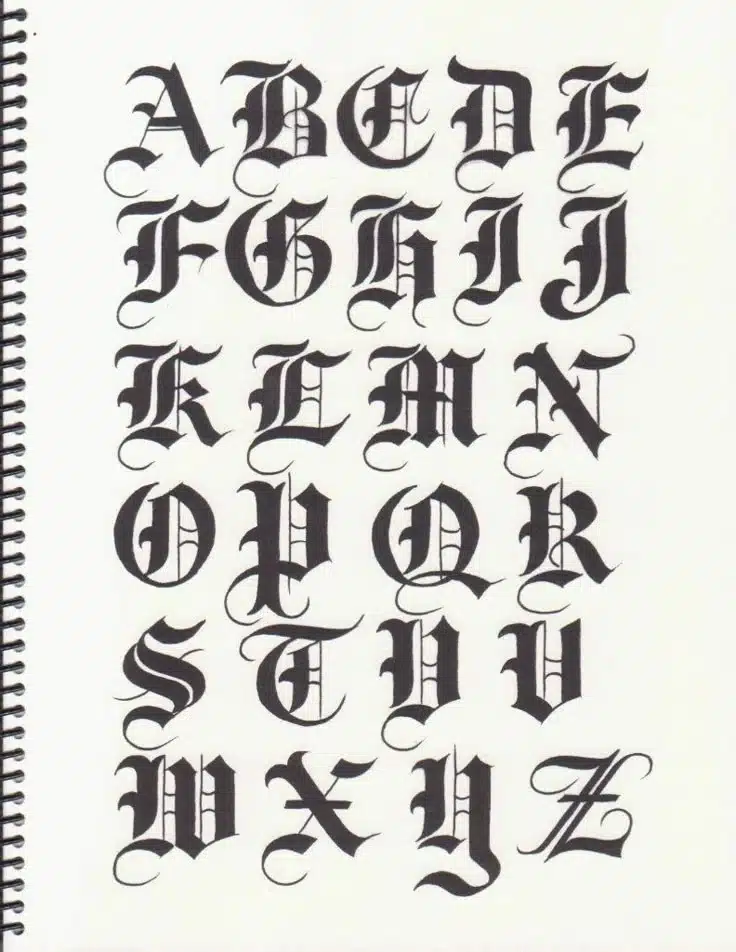
Alphabet fonts for tattoos matter most when you’re choosing initials, monograms, or single-letter tattoos. Look closely at:
the shape of A, R, S, M (often the most distinctive)
how curves connect in script letters
whether uppercase letters look balanced in small sizes
Alphabet fonts for tattoos
A quick test: type your initials in the generator in both uppercase and lowercase, then compare. Many script styles have stronger lowercase flow, while serif styles often have more confident uppercase structure.
Number Fonts for Tattoos
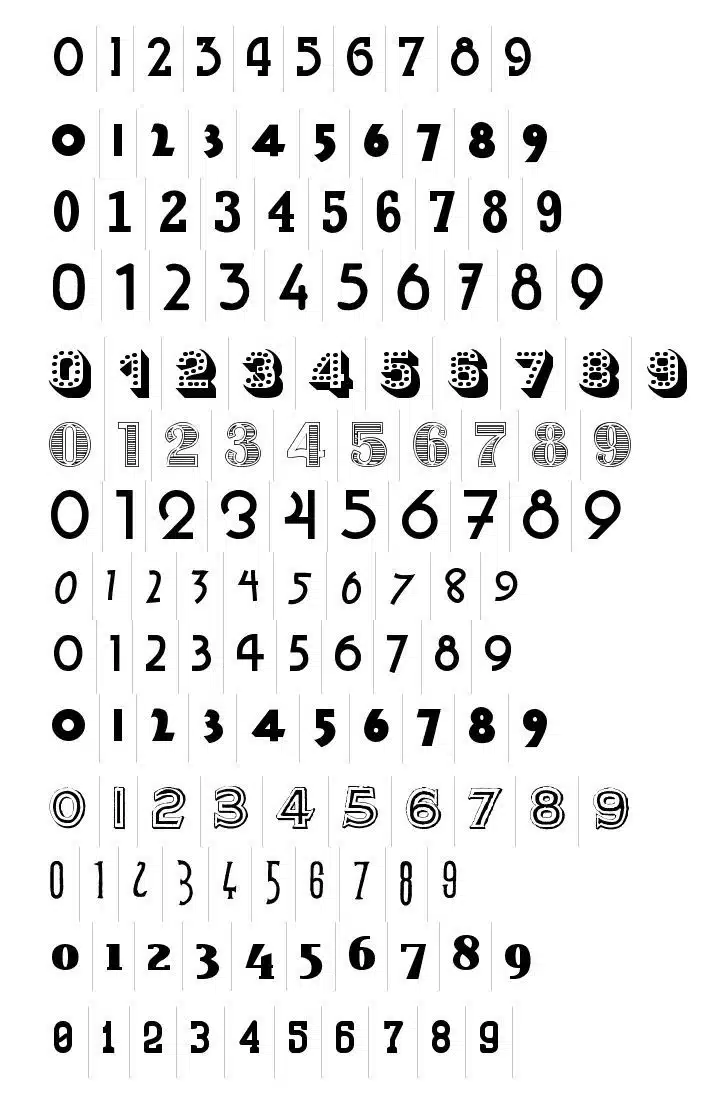
Number font styles for tattoos are popular for dates (birthdays, anniversaries, coordinates). Numbers need to stay readable over time, so avoid overly thin, crowded styles.
Tips for cleaner number tattoos:
choose a style where 1, 7, and 9 are clearly distinct
avoid heavy decoration that makes 0/8 look similar
try both Roman numeral concepts (if you like that look) and standard digits
test spacing around separators like “/” or “•”
Number fonts for tattoos
If the date is meaningful, readability is part of honoring it—so choose clarity over extreme decoration.
Cursive handwriting for tattoos works because it feels human and intimate. But cursive also has the highest risk of becoming unreadable if it’s too thin or overly looped.
For good cursive choices:
pick a script with clean connections (letters shouldn’t “tangle”)
avoid extreme flourishes unless the tattoo is large
test your word at small size—if you can’t read it instantly, simplify
Cursive shines for single names, short phrases, and signature-style quotes.
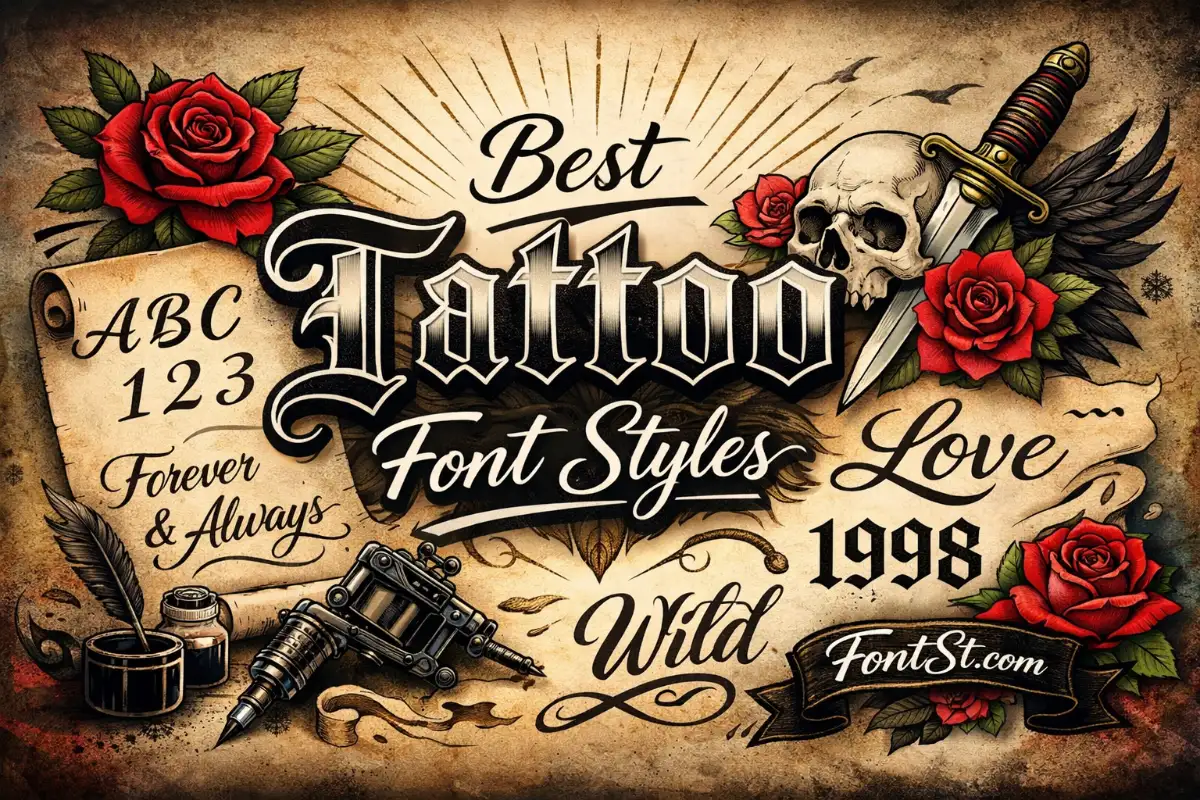
A traditional tattoo font typically looks bold, classic, and built for longevity. Traditional-style lettering often pairs well with old-school tattoo imagery (roses, daggers, anchors), but it also works as stand-alone text when you want a timeless feel.
Why traditional lettering works:
thicker strokes age better
strong shapes remain readable
it looks intentional even at medium sizes
If your tattoo is meant to feel iconic rather than delicate, traditional lettering is a great direction.
Old English Font for Tattoo
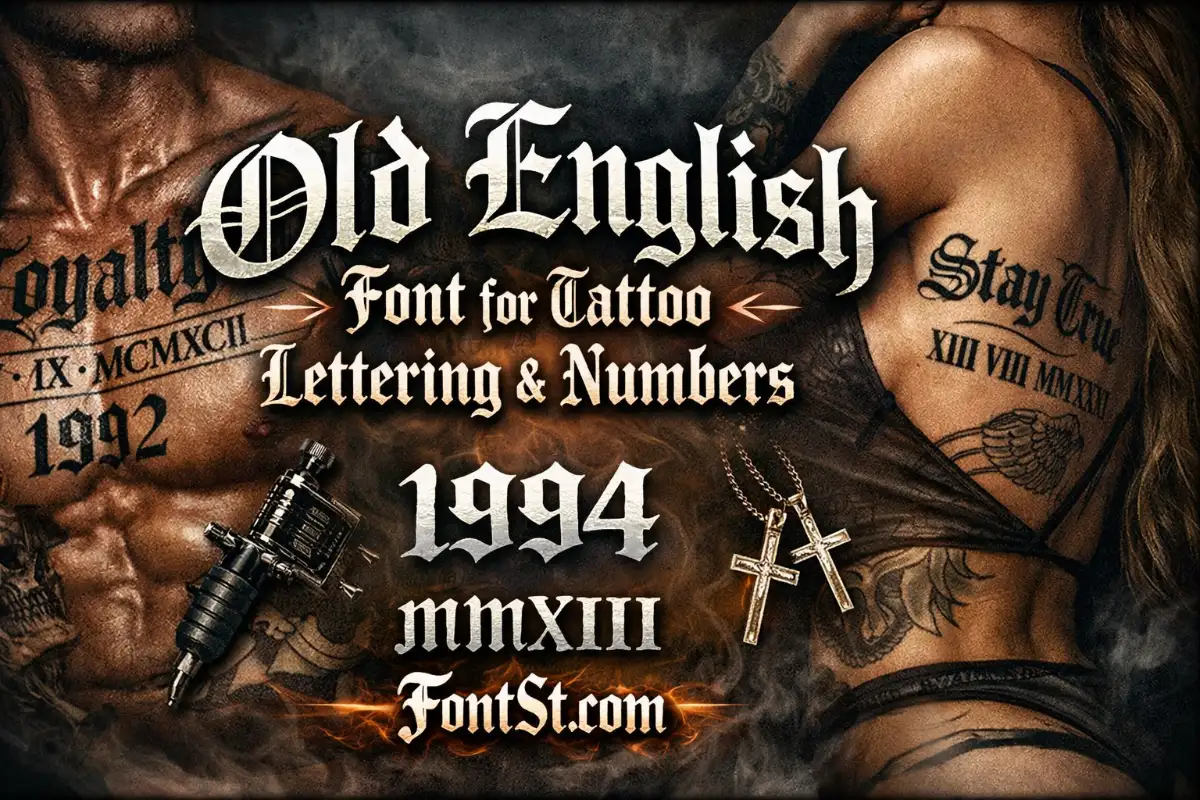
An old english font for tattoo (often called blackletter) is dramatic and instantly recognizable. It’s great for short words, names, and strong themes—but it can become dense if the text is long.
How to use Old English well:
keep text short (1–3 words is often ideal)
avoid overly tight spacing
choose a style with clear letter distinction (especially for C/G/O/Q)
Old English looks best when it has room and weight—don’t force it into tiny placements.
Searching best lettering tattoo ideas is really about composition. The most memorable lettering tattoos are designed, not just typed.
Ideas that stay clean and meaningful:
a single word with strong spacing
a short phrase broken into two lines
a name with a small divider symbol
a date in a clean font below a script name
a phrase where one keyword is emphasized by a bolder style
A great lettering tattoo is one you can read instantly—even from a distance.
Lettering Name Tattoo Design
A lettering name tattoo design should prioritize clarity and emotion. Names are often placed on wrists, collarbones, forearms, or ribs—each area affects how text should be sized and spaced.
Try these planning tests:
nickname vs full name (which feels more personal?)
title case vs lowercase (lowercase often looks softer)
straight vs slight curve (depending on placement)
If the name is someone important, keep it readable and timeless. Trendy distortion styles can feel dated faster.
Cute tattoo fonts for names usually lean toward rounded, friendly scripts or lighter decorative styles. They’re popular for small placements and personal vibes.
To keep “cute” from becoming messy:
avoid overly swirly scripts
choose clean letter forms
keep the name short
consider adding a simple symbol rather than extra flourishes
Cute works best when it’s minimal and balanced.
Tattoo Fonts for Men
Tattoo fonts for men often trend toward bold, confident styles—traditional lettering, strong serif fonts, clean uppercase, or Old English for dramatic impact.
If you want a strong look:
try uppercase with wide spacing
choose a thicker stroke style
keep words short and direct
avoid overly delicate scripts unless that’s the intended contrast
The best “masculine” lettering is simply the lettering that fits your story and placement.
Tattoo fonts for women are often associated with elegant cursive and fine-line lettering, but there’s no one rule—many people choose bold or Old English styles too.
If you want elegant lettering:
choose a clean cursive with readable connections
keep it short and well-spaced
avoid super-thin strokes for tiny tattoos (they may blur over time)
For a modern aesthetic, minimal serif or clean small caps can look incredibly refined.
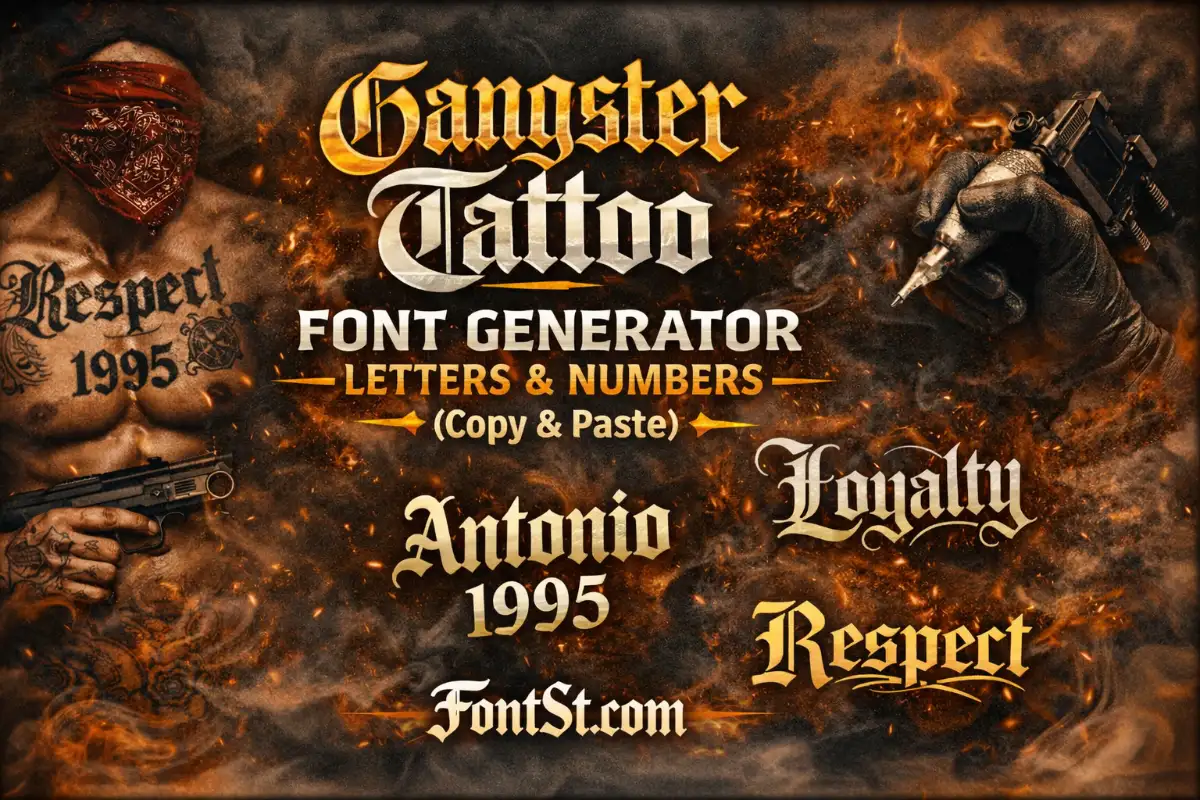
What is a tattoo font gen? A tattoo font gen is a quick way to preview different tattoo-style lettering for names, quotes, and dates. It helps you compare styles before choosing a direction for the final design.
What is a good font for tattoo lettering? A good font for tattoo text is readable at the size you want, matches the meaning, and uses strokes that will age well. Clean script, classic serif, and traditional lettering are usually safe starting points.
Are tattoo fonts cursive always a good choice? Tattoo fonts cursive can look elegant and personal, but they should stay readable—especially in small placements. Choose a cursive style with clear letter shapes and avoid overly tight loops.
Is there a free tattoo font maker I can use online? Yes—FontSt works as a free tattoo font maker for planning and previewing styles. You can type text, generate options, and copy styles to save and share.
How does a tattoo font converter work? A tattoo font converter transforms normal text into decorative Unicode-style lettering you can preview and copy. It’s great for inspiration, but a tattoo artist will refine spacing and stroke details for the final stencil.
Is a calligraphy font for tattoo better than script? A calligraphy font for tattoo often looks more “inked” and expressive than simple script, but it can also get busy. If you want a clean result, pick calligraphy styles with controlled flourishes and test them at the final size.
Final Tips Before You Commit
Test your text at the size you actually want.
Keep it readable from normal viewing distance.
Use the generator to narrow to 2–3 favorites, then let your tattoo artist refine the final layout.
Don’t rush—lettering tattoos are all about lasting clarity and meaning.